
Technical systems continuously monitor organisations’ operations and detect anomalies automatically. But what happens after a system sends an alert? Does the information reach the right people, and how can we be sure that someone actually responds?
Cyberattacks targeting refrigeration equipment, also reported in Finland, show that disruptions to technical systems can have tangible effects on an organisation’s operations. This is why simply detecting an anomaly is not enough. An effective alerting chain is also needed to connect technical systems, responsible personnel and the necessary actions. This is where Secapp’s automated system alerts and integrations can help.
Cyberattacks on refrigeration equipment highlight the importance of a rapid response
In November 2026, reports emerged of cyberattacks that disrupted refrigeration equipment in grocery stores across Europe. According to a news report published by Yle on 4 November 2026 (in Finnish), the attack targeted a remote management system for refrigeration equipment that was accessible over the internet. On 6 November 2026, the National Cyber Security Centre Finland confirmed (in Finnish) that the refrigeration equipment disruptions detected in Finland were also caused by a cyberattack.
The incident shows how an information security incident can affect an organisation’s physical operations. In addition to cyberattacks, similar disruptions can be caused by equipment failures, power outages and other technical problems.
Regardless of the cause of the disruption, what matters is how quickly the information reaches people who can respond. If, for example, the temperature of a refrigeration unit starts to rise, every minute of delay can increase the risk of damage.
When a technical system detects an anomaly, what happens next?
In many organisations, technical systems can already generate alerts. However, a notification may remain within the system’s own interface or arrive as a message that does not give the recipient enough information about the situation. Older systems in particular may send notifications that contain little more than a technical fault code.
In an urgent situation, the recipient should not first have to work out what the alert means or where the problem is located. Secapp can act as a link between technical systems and people. When alert information from a monitoring system is received in Secapp, it can be used to trigger a predefined alerting chain.
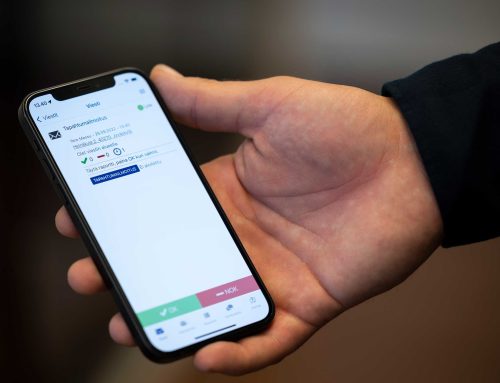
For example, when the temperature of a refrigeration unit exceeds the permitted limit, the monitoring system can send the information to Secapp. The alert can be directed to the appropriate responsible personnel and supplemented with a clear description, location information and instructions.
“Once we receive alert information from a technical system in Secapp, Secapp’s functionalities become available. For example, the alert can be supplemented with location information and instructions, and automatically routed to the right people,” says Janne Mylläri, Account Director at Secapp.
Secapp does not prevent a cyberattack or replace a technical monitoring system, but it can turn a detected anomaly into an alert that reaches the people responsible for the situation and helps initiate the necessary actions.
Alert information can be brought into Secapp from many different systems
Secapp can be connected to various technical systems whose alerts require people to respond. For example, building and industrial automation systems can provide information about temperature deviations, gas alarms, motion detectors or other monitored conditions. An alert can be triggered automatically when a predefined threshold is exceeded.
Secapp’s integration capabilities also extend to an organisation’s other information systems, such as enterprise resource planning and service management systems. Bidirectional integrations allow information to flow between systems in both directions. Secapp can also be connected to an organisation’s personnel directory, allowing existing personnel and group information to be used, for example, to define alert recipients.
In addition, Secapp’s integration capabilities extend to communications between public authorities, including the Virve and Virve 2 systems. This allows Secapp to support the flow of information in operating environments where public authority and security communications play a central role.
The purpose of integrations is not simply to connect systems technically, but to ensure that the information they produce reaches the right people and initiates the necessary actions.
What if no one responds to an alert?
Sending an alert does not yet guarantee that someone will take action. This is why it must also be possible to verify that the alert has been received and responded to.
In Secapp, recipients, backup personnel and priorities can be defined for alerts. Alerts can be delivered through multiple channels, including the mobile application, text message, email or an automated phone call.
Recipients’ acknowledgements can be monitored in real time. If the first person responsible does not respond within a defined time, the alert can be automatically escalated to the next people.
This ensures that the alerting chain does not depend on a single recipient. This is particularly important in the evenings, at night and at weekends, when reaching the right people can be more challenging than usual.
At the same time, documented information is collected about how the situation is handled. Acknowledgements, messages and actions taken support the development of situational awareness, and event records can also be reviewed during subsequent investigations and reporting.
Automated alerts can be used in a wide range of environments
Refrigeration equipment is just one example of a technical system whose alert information can be connected to Secapp. Similar use cases can be found across many sectors:
- Industry: production disruptions, equipment failures and gas leaks
- Buildings: water leaks, power outages and ventilation disruptions
- Healthcare: monitoring of cold rooms used to store medicines and other critical systems
- Energy and water supply: network disruptions and equipment failures
- IT and cybersecurity: information security incidents and system outages
When alerts can be received from different systems, an organisation can use consistent operating procedures to respond to anomalies.
Information can also be sent from Secapp to other systems, such as information displays. These can complement alerts sent directly to individuals, for example during evacuations or shelter-in-place situations, when instructions need to reach a wider group of people.
Do you know what happens after a critical alert?
Technical integration alone does not resolve disruption management. An organisation also needs to define which anomalies trigger alerts, who receives the information and how recipients are expected to act.
“The most important thing is that the organisation’s internal processes, roles and responsibilities have been considered in advance. This is the organisation’s own preparedness planning, part of which is brought into Secapp. When an anomaly occurs, people can then act in a predefined way,” Mylläri explains.
You can assess the effectiveness of your organisation’s alerting chains with a few questions:
- Which of our technical systems generate alerts that are critical to our operations?
- Who receives the information if a disruption occurs outside working hours?
- How do we know that someone has received the alert and taken action?
- What happens if the first person responsible does not respond?
Alerting chains should also be tested in practice. You can start with one critical use case and extend the operating model to other systems later. A technical system can detect a problem, but the real benefit only comes when the information reaches the right people and leads to action.
Make sure your systems’ alerts lead to action
Do your organisation’s technical systems generate alerts whose delivery to the right people needs to be improved?
Secapp can connect alert information from systems with reaching people, acknowledgements and disruption management.
Book a demo, and let’s explore how your organisation’s critical alerting chains can be implemented with Secapp.
Technical systems continuously monitor organisations’ operations and detect anomalies automatically. But what happens after a system sends an alert? Does the information reach the right people, and how can we be sure that someone actually responds?
Cyberattacks targeting refrigeration equipment, also reported in Finland, show that disruptions to technical systems can have tangible effects on an organisation’s operations. This is why simply detecting an anomaly is not enough. An effective alerting chain is also needed to connect technical systems, responsible personnel and the necessary actions. This is where Secapp’s automated system alerts and integrations can help.
Cyberattacks on refrigeration equipment highlight the importance of a rapid response
In November 2026, reports emerged of cyberattacks that disrupted refrigeration equipment in grocery stores across Europe. According to a news report published by Yle on 4 November 2026 (in Finnish), the attack targeted a remote management system for refrigeration equipment that was accessible over the internet. On 6 November 2026, the National Cyber Security Centre Finland confirmed (in Finnish) that the refrigeration equipment disruptions detected in Finland were also caused by a cyberattack.
The incident shows how an information security incident can affect an organisation’s physical operations. In addition to cyberattacks, similar disruptions can be caused by equipment failures, power outages and other technical problems.
Regardless of the cause of the disruption, what matters is how quickly the information reaches people who can respond. If, for example, the temperature of a refrigeration unit starts to rise, every minute of delay can increase the risk of damage.
When a technical system detects an anomaly, what happens next?
In many organisations, technical systems can already generate alerts. However, a notification may remain within the system’s own interface or arrive as a message that does not give the recipient enough information about the situation. Older systems in particular may send notifications that contain little more than a technical fault code.
In an urgent situation, the recipient should not first have to work out what the alert means or where the problem is located. Secapp can act as a link between technical systems and people. When alert information from a monitoring system is received in Secapp, it can be used to trigger a predefined alerting chain.
For example, when the temperature of a refrigeration unit exceeds the permitted limit, the monitoring system can send the information to Secapp. The alert can be directed to the appropriate responsible personnel and supplemented with a clear description, location information and instructions.
“Once we receive alert information from a technical system in Secapp, Secapp’s functionalities become available. For example, the alert can be supplemented with location information and instructions, and automatically routed to the right people,” says Janne Mylläri, Account Director at Secapp.
Secapp does not prevent a cyberattack or replace a technical monitoring system, but it can turn a detected anomaly into an alert that reaches the people responsible for the situation and helps initiate the necessary actions.
Alert information can be brought into Secapp from many different systems
Secapp can be connected to various technical systems whose alerts require people to respond. For example, building and industrial automation systems can provide information about temperature deviations, gas alarms, motion detectors or other monitored conditions. An alert can be triggered automatically when a predefined threshold is exceeded.
Secapp’s integration capabilities also extend to an organisation’s other information systems, such as enterprise resource planning and service management systems. Bidirectional integrations allow information to flow between systems in both directions. Secapp can also be connected to an organisation’s personnel directory, allowing existing personnel and group information to be used, for example, to define alert recipients.
In addition, Secapp’s integration capabilities extend to communications between public authorities, including the Virve and Virve 2 systems. This allows Secapp to support the flow of information in operating environments where public authority and security communications play a central role.
The purpose of integrations is not simply to connect systems technically, but to ensure that the information they produce reaches the right people and initiates the necessary actions.
What if no one responds to an alert?
Sending an alert does not yet guarantee that someone will take action. This is why it must also be possible to verify that the alert has been received and responded to.
In Secapp, recipients, backup personnel and priorities can be defined for alerts. Alerts can be delivered through multiple channels, including the mobile application, text message, email or an automated phone call.
Recipients’ acknowledgements can be monitored in real time. If the first person responsible does not respond within a defined time, the alert can be automatically escalated to the next people.
This ensures that the alerting chain does not depend on a single recipient. This is particularly important in the evenings, at night and at weekends, when reaching the right people can be more challenging than usual.
At the same time, documented information is collected about how the situation is handled. Acknowledgements, messages and actions taken support the development of situational awareness, and event records can also be reviewed during subsequent investigations and reporting.
Automated alerts can be used in a wide range of environments
Refrigeration equipment is just one example of a technical system whose alert information can be connected to Secapp. Similar use cases can be found across many sectors:
- Industry: production disruptions, equipment failures and gas leaks
- Buildings: water leaks, power outages and ventilation disruptions
- Healthcare: monitoring of cold rooms used to store medicines and other critical systems
- Energy and water supply: network disruptions and equipment failures
- IT and cybersecurity: information security incidents and system outages
When alerts can be received from different systems, an organisation can use consistent operating procedures to respond to anomalies.
Information can also be sent from Secapp to other systems, such as information displays. These can complement alerts sent directly to individuals, for example during evacuations or shelter-in-place situations, when instructions need to reach a wider group of people.
Do you know what happens after a critical alert?
Technical integration alone does not resolve disruption management. An organisation also needs to define which anomalies trigger alerts, who receives the information and how recipients are expected to act.
“The most important thing is that the organisation’s internal processes, roles and responsibilities have been considered in advance. This is the organisation’s own preparedness planning, part of which is brought into Secapp. When an anomaly occurs, people can then act in a predefined way,” Mylläri explains.
You can assess the effectiveness of your organisation’s alerting chains with a few questions:
- Which of our technical systems generate alerts that are critical to our operations?
- Who receives the information if a disruption occurs outside working hours?
- How do we know that someone has received the alert and taken action?
- What happens if the first person responsible does not respond?
Alerting chains should also be tested in practice. You can start with one critical use case and extend the operating model to other systems later. A technical system can detect a problem, but the real benefit only comes when the information reaches the right people and leads to action.
Make sure your systems’ alerts lead to action
Do your organisation’s technical systems generate alerts whose delivery to the right people needs to be improved?
Secapp can connect alert information from systems with reaching people, acknowledgements and disruption management.
Book a demo, and let’s explore how your organisation’s critical alerting chains can be implemented with Secapp.