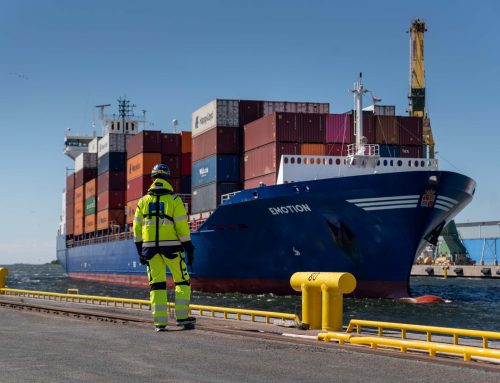
The Suojaan 2026 exercise was based on a scenario involving disruptions to critical infrastructure and a deteriorating security situation.
On 2 September, Savo Vocational College’s Savilahti campus was evacuated in under ten minutes during the Suojaan 2026 civil defence exercise in Kuopio. Alongside directing a large group of people, the exercise tested how instructions are communicated to staff and how information on response progress is gathered. Secapp was used in the excercise to alert staff and collect their responses.
It is a quarter past eleven at Savo Vocational College’s Savilahti campus in Kuopio. The atmosphere is expectant and slightly tense in the main building lobby. Students and staff can be seen approaching members of the crisis response team, identifiable by their yellow vests, to ask about the exercise. Soon it’s time to relocate to the civil defence shelter.
The sheltering exercise for educational institutions, held on 2 September, was part of the two-day Suojaan 2026 civil defence exercise in Kuopio, Finland. In the fictional scenario, disruptions to critical infrastructure and a deteriorating security situation require people to be moved to shelter. The aim was to practise protecting large numbers of people and cooperation between authorities, educational institutions and other organisations.
Around 2,000 people participated in the exercise, with than a thousand students and staff members from Savo Vocational College participating, alongside participants from organisations including Savonia University of Applied Sciences and Luovi Vocational College.
The scale was exceptional: according to the City of Kuopio, Finland has not seen a civil defence exercise of comparable size for decades. In its English-language news coverage, Yle described the event as Europe’s largest civil defence exercise since the Second World War.
The alert triggers a coordinated response
At 11:26 am, an announcement signals the start of the exercise. Instructions are broadcast in Finnish and English over the campus loudspeakers. The exercise alert itself is issued at 11:30 am.
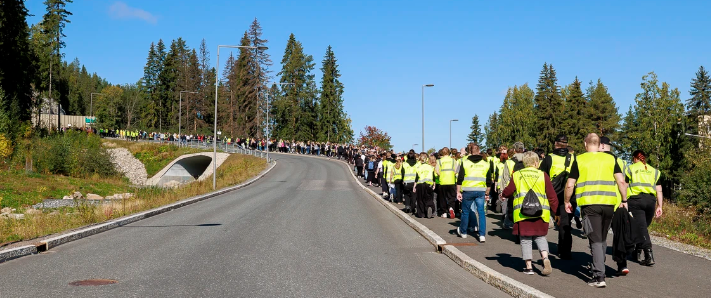
Now Secapp’s high-priority alert (a loud alert tone that sounds even when the phone is in silent mode) sound starts on staff members’ phones. Students begin moving under their teachers’ guidance. The evacuation proceeds calmly, and groups stay together at the assembly point. Meanwhile, participants assigned specific responsibilities check that the premises are being cleared and direct others onwards. People clearly know whom to follow, and those guiding them stand out from the crowd.
According to Savo Vocational College’s post-exercise report, the entire campus was evacuated in under ten minutes. From the assembly points, participants continued towards the civil defence shelter at Savilahden Luola.
Secapp supports staff alerting and communication
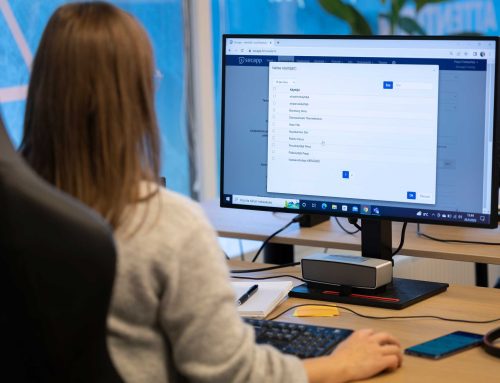
Savo Vocational College has been using Secapp for a long time. During Suojaan 2026, the system was used to send staff the initial alert and, later, to notify them that the exercise had ended.
Communication through Secapp complemented the campus announcements and guidance provided on site. Messages sent to staff supported their work as they guided groups of students according to shared instructions.
Timo Toivonen, Security Manager at the Savo Consortium of Education, emphasises the importance of being able to reach people reliably in an educational environment.
“Secapp has become a key tool for our safety and preparedness, alongside a Virve radio terminal. It enables us to reach staff quickly during various disruptions and emergencies.
In an educational environment, it is important to be able to deliver messages and instructions reliably to large numbers of people at the same time. Secapp supports this task extremely well and is an important part of our safety and security management.”
Guidance and information flow are key inside the shelter
Savilahden Luola normally operates as a sports and events centre, but when needed, it also provides a civil defence shelter for nearly 7,000 people. For the exercise, the facilities had been prepared for their secondary purpose. It’s easy to see how the dual-use potential of facilities and systems is playing an increasingly important role in strengthening safety and security in today’s operating environment.
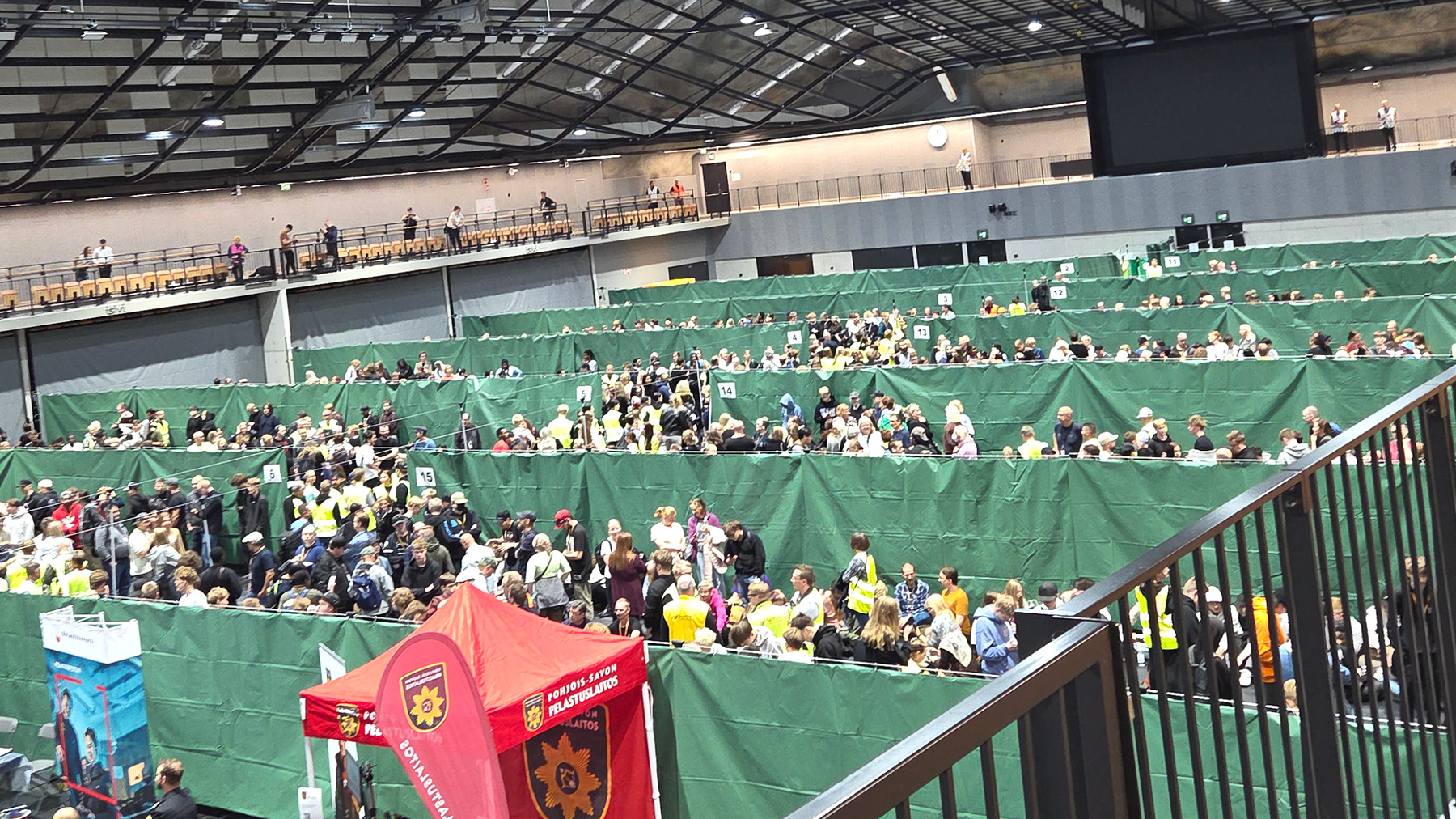
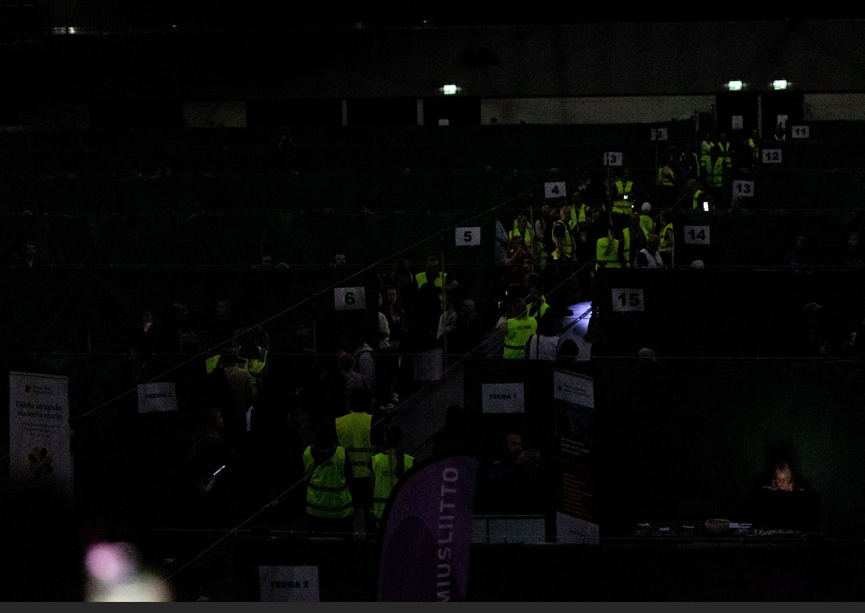
Inside, the sound of the crowd fills the space. Those guiding the groups use hand signals to direct the crowd. Despite the noise, the directions are clear, and participants find their designated areas.
The shelter has been divided into sections using tarpaulin partitions. The three-tier bunk beds attract the students’ interest, and some settle onto them to wait. Teachers and other staff talk with the students, answer questions, and maintain a calm atmosphere.
The doors to Luola were closed at 12:15 pm and reopened at 2:00 pm, when the educational institutions’ part of the exercise ended. During the time in the shelter, information was shared through announcements and on a large screen.
The situation illustrated the importance of maintaining communication after people have reached the shelter. Participants need to know what is happening, what is expected of them and what comes next. The presence of staff and the opportunity to ask for advice helped provide this guidance in practice.
According to Toivonen, information flow is an essential part of maintaining an organisation’s ability to operate.
“In communication, it is important that information moves quickly and people know what they need to do. Secapp makes this possible in practice. The system is part of our overall approach to maintaining our ability to operate, including during emergencies and various security situations.”
Familiar day-to-day procedures support crisis preparedness
According to Eero Väätäinen, Marketing Manager at the Savo Consortium of Education, Secapp has performed well as a system, but its use and the associated procedures need to be practised regularly. Toivonen also highlights the importance of maintaining contact details, staff competence and the situational awareness needed to lead the response.
“Exercises have shown that a technical system alone is not enough; maintaining an accurate, up-to-date picture of the situation is the most important factor in leading the response. Keeping contact details up to date, users’ skills and regular practice are at least as important. Every exercise strengthens staff members’ ability to recognise an alert, understand the procedures and act as the situation requires.”
Savo Vocational College’s experience shows how everyday use and preparedness are connected. When staff are familiar with the system and its procedures, an exercise can focus on applying them in a shared situation.
Exercises support incident management
Secapp’s Customer Success Manager Tero Koivikko observed the exercise on site. According to Koivikko, it was clear during the exercise that users were familiar with the system and also used it regularly in their day-to-day work.
“The exercise showed that the Savo Consortium for Education also uses Secapp as part of its everyday communication. Sending and receiving alert messages was clearly familiar to users.”
Koivikko sees an opportunity to make even greater use of communication to support incident management in future exercises.
“In similar exercises, I would like to bring disruption-related communication even closer to incident management. In addition to sending an evacuation or sheltering alert, I would send a separate message to those responsible for checking the premises. This would give me direct information about which rooms or areas had been checked or cleared,” Koivikko says.
Exercises contribute to Europe’s preparedness
Secapp’s CEO Kari Aho also considers the significance of exercises within the broader European security environment. In his view, joint exercises make clear the kind of capabilities that organisations and the technology they use need to support.
“The Suojaan 2026 exercise demonstrated the readiness and preparedness that global instability demands of us: the ability to protect large numbers of people when necessary, including during major disruptions and emergencies. Emergency response plans must quickly translate into coordinated action, with staff knowing their responsibilities and management knowing who has been reached, which premises have been checked and where help is needed.”
One area of focus in European preparedness is strengthening the resilience of critical entities. This objective is supported, among other measures, by the EU’s CER legislation, which addresses the ability of critical entities providing essential services to society to prepare for and cope with disruptions.
Aho sees a need for solutions that protect people and premises in everyday operations while also supporting the response to crises and civil defence situations.
“Technology that is familiar from everyday use and procedures that have been practised provide the foundation for responding to a crisis. This also includes digital autonomy: control over critical communications and information, and the readiness to continue operating when external services are disrupted.
At Secapp, we are developing these capabilities so that people can be reached, operations managed and assistance directed where it is needed when every second matters.”
At the Savilahti campus, preparedness took a practical form: staff received instructions, guided students and reported on their actions. The shared experience of taking shelter provides a foundation for future exercises and the continued development of preparedness.
The Suojaan 2026 exercise was based on a scenario involving disruptions to critical infrastructure and a deteriorating security situation.
On 2 September, Savo Vocational College’s Savilahti campus was evacuated in under ten minutes during the Suojaan 2026 civil defence exercise in Kuopio. Alongside directing a large group of people, the exercise tested how instructions are communicated to staff and how information on response progress is gathered. Secapp was used in the excercise to alert staff and collect their responses.
It is a quarter past eleven at Savo Vocational College’s Savilahti campus in Kuopio. The atmosphere is expectant and slightly tense in the main building lobby. Students and staff can be seen approaching members of the crisis response team, identifiable by their yellow vests, to ask about the exercise. Soon it’s time to relocate to the civil defence shelter.
The sheltering exercise for educational institutions, held on 2 September, was part of the two-day Suojaan 2026 civil defence exercise in Kuopio, Finland. In the fictional scenario, disruptions to critical infrastructure and a deteriorating security situation require people to be moved to shelter. The aim was to practise protecting large numbers of people and cooperation between authorities, educational institutions and other organisations.
Around 2,000 people participated in the exercise, with than a thousand students and staff members from Savo Vocational College participating, alongside participants from organisations including Savonia University of Applied Sciences and Luovi Vocational College.
The scale was exceptional: according to the City of Kuopio, Finland has not seen a civil defence exercise of comparable size for decades. In its English-language news coverage, Yle described the event as Europe’s largest civil defence exercise since the Second World War.
The alert triggers a coordinated response
At 11:26 am, an announcement signals the start of the exercise. Instructions are broadcast in Finnish and English over the campus loudspeakers. The exercise alert itself is issued at 11:30 am.
Now Secapp’s high-priority alert (a loud alert tone that sounds even when the phone is in silent mode) sound starts on staff members’ phones. Students begin moving under their teachers’ guidance. The evacuation proceeds calmly, and groups stay together at the assembly point. Meanwhile, participants assigned specific responsibilities check that the premises are being cleared and direct others onwards. People clearly know whom to follow, and those guiding them stand out from the crowd.
According to Savo Vocational College’s post-exercise report, the entire campus was evacuated in under ten minutes. From the assembly points, participants continued towards the civil defence shelter at Savilahden Luola.
Secapp supports staff alerting and communication
Savo Vocational College has been using Secapp for a long time. During Suojaan 2026, the system was used to send staff the initial alert and, later, to notify them that the exercise had ended.
Communication through Secapp complemented the campus announcements and guidance provided on site. Messages sent to staff supported their work as they guided groups of students according to shared instructions.
Timo Toivonen, Security Manager at the Savo Consortium of Education, emphasises the importance of being able to reach people reliably in an educational environment.
“Secapp has become a key tool for our safety and preparedness, alongside a Virve radio terminal. It enables us to reach staff quickly during various disruptions and emergencies.
In an educational environment, it is important to be able to deliver messages and instructions reliably to large numbers of people at the same time. Secapp supports this task extremely well and is an important part of our safety and security management.”
Guidance and information flow are key inside the shelter
Savilahden Luola normally operates as a sports and events centre, but when needed, it also provides a civil defence shelter for nearly 7,000 people. For the exercise, the facilities had been prepared for their secondary purpose. It’s easy to see how the dual-use potential of facilities and systems is playing an increasingly important role in strengthening safety and security in today’s operating environment.
Inside, the sound of the crowd fills the space. Those guiding the groups use hand signals to direct the crowd. Despite the noise, the directions are clear, and participants find their designated areas.
The shelter has been divided into sections using tarpaulin partitions. The three-tier bunk beds attract the students’ interest, and some settle onto them to wait. Teachers and other staff talk with the students, answer questions, and maintain a calm atmosphere.
The doors to Luola were closed at 12:15 pm and reopened at 2:00 pm, when the educational institutions’ part of the exercise ended. During the time in the shelter, information was shared through announcements and on a large screen.
The situation illustrated the importance of maintaining communication after people have reached the shelter. Participants need to know what is happening, what is expected of them and what comes next. The presence of staff and the opportunity to ask for advice helped provide this guidance in practice.
According to Toivonen, information flow is an essential part of maintaining an organisation’s ability to operate.
“In communication, it is important that information moves quickly and people know what they need to do. Secapp makes this possible in practice. The system is part of our overall approach to maintaining our ability to operate, including during emergencies and various security situations.”
Familiar day-to-day procedures support crisis preparedness
According to Eero Väätäinen, Marketing Manager at the Savo Consortium of Education, Secapp has performed well as a system, but its use and the associated procedures need to be practised regularly. Toivonen also highlights the importance of maintaining contact details, staff competence and the situational awareness needed to lead the response.
“Exercises have shown that a technical system alone is not enough; maintaining an accurate, up-to-date picture of the situation is the most important factor in leading the response. Keeping contact details up to date, users’ skills and regular practice are at least as important. Every exercise strengthens staff members’ ability to recognise an alert, understand the procedures and act as the situation requires.”
Savo Vocational College’s experience shows how everyday use and preparedness are connected. When staff are familiar with the system and its procedures, an exercise can focus on applying them in a shared situation.
Exercises support incident management
Secapp’s Customer Success Manager Tero Koivikko observed the exercise on site. According to Koivikko, it was clear during the exercise that users were familiar with the system and also used it regularly in their day-to-day work.
“The exercise showed that the Savo Consortium for Education also uses Secapp as part of its everyday communication. Sending and receiving alert messages was clearly familiar to users.”
Koivikko sees an opportunity to make even greater use of communication to support incident management in future exercises.
“In similar exercises, I would like to bring disruption-related communication even closer to incident management. In addition to sending an evacuation or sheltering alert, I would send a separate message to those responsible for checking the premises. This would give me direct information about which rooms or areas had been checked or cleared,” Koivikko says.
Exercises contribute to Europe’s preparedness
Secapp’s CEO Kari Aho also considers the significance of exercises within the broader European security environment. In his view, joint exercises make clear the kind of capabilities that organisations and the technology they use need to support.
“The Suojaan 2026 exercise demonstrated the readiness and preparedness that global instability demands of us: the ability to protect large numbers of people when necessary, including during major disruptions and emergencies. Emergency response plans must quickly translate into coordinated action, with staff knowing their responsibilities and management knowing who has been reached, which premises have been checked and where help is needed.”
One area of focus in European preparedness is strengthening the resilience of critical entities. This objective is supported, among other measures, by the EU’s CER legislation, which addresses the ability of critical entities providing essential services to society to prepare for and cope with disruptions.
Aho sees a need for solutions that protect people and premises in everyday operations while also supporting the response to crises and civil defence situations.
“Technology that is familiar from everyday use and procedures that have been practised provide the foundation for responding to a crisis. This also includes digital autonomy: control over critical communications and information, and the readiness to continue operating when external services are disrupted.
At Secapp, we are developing these capabilities so that people can be reached, operations managed and assistance directed where it is needed when every second matters.”
At the Savilahti campus, preparedness took a practical form: staff received instructions, guided students and reported on their actions. The shared experience of taking shelter provides a foundation for future exercises and the continued development of preparedness.