
© Meyer Turku
When thousands of people and hundreds of companies work at the same shipyard every day, simply sending a message is not enough for safety communications. It must quickly reach precisely the right people – and only them. Meyer Turku, one of the world’s leading shipbuilders, centralised its crisis and safety communications and the shipyard fire brigade’s reporting in Secapp.
Meyer Turku is one of the world’s leading builders of large, technically advanced cruise ships and specialised vessels. In addition to Meyer Turku’s own personnel, an extensive network of partners and their subcontractors contributes to the major shipbuilding projects at the Turku shipyard.
In such a large and constantly changing operating environment, safety information must flow quickly and in a controlled manner. What matters is not just how many people a message can be sent to, but also whether recipients can be selected according to the situation and message delivery can be verified.
Meyer Turku officially began using Secapp in early 2025. The aim was to improve control over crisis communications and bring the shipyard fire brigade’s reporting and other daily activities onto a single platform.
“Meyer Turku has an extensive operating environment, and the shipyard works with cutting-edge technology. The solutions used must therefore perform in a demanding environment. Together, we have identified clear use cases for Secapp and had useful discussions about how its use can be developed further,” says Janne Mylläri, Account Director at Secapp.
From an SMS distribution list to more targeted communications
Meyer Turku’s previous SMS-based solution did not allow recipients to be targeted with sufficient precision and flexibility as situations changed.
In Secapp, recipients can be divided into groups according to their purpose. A message is sent only to the people who should receive that information, and the situation can be discussed within a restricted group.
“Secapp has helped us take a major step forward in alerting and crisis communications. We have been able to target communications more effectively to the departments and people who need the information,” says Mikko Helenius, Deputy Fire Chief at Meyer Turku.
Fire brigade reporting moved to a single platform
At Meyer Turku, Secapp is more than a tool for alerting and crisis communications. The shipyard fire brigade uses it daily for shift reporting and for preparing activity reports and call-out reports.
The fire brigade operates around the clock in two shifts. At the start of a shift, an employee opens a shift report in Secapp, where events are recorded as the shift progresses. The report is reviewed during the shift handover, and the next shift can refer to it to check earlier events if needed.
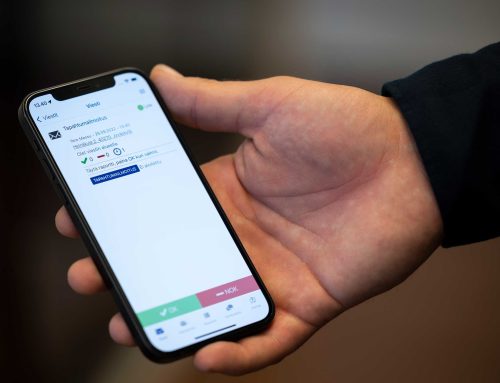
The fire brigade’s activity reports and call-out reports can also be completed using Secapp’s mobile application while still on site or immediately after an assignment. Previously, information was entered into different programs on a computer. Secapp has brought reporting onto the same platform and made recording information and passing it on to the next shift more structured.
“Shift reporting by Meyer Turku’s fire brigade is an excellent, concrete example of how Secapp can support daily work and information sharing alongside exceptional situations. When shift events are recorded on the same platform, the information is retained and passed smoothly to the next shift,” Mylläri says.
Secapp is also used to send requests for overtime work to the shipyard fire brigade. Ready-made message templates have been created for different overtime situations, allowing an appropriate request to be sent quickly to all the personnel needed. Overtime requests may be needed, for example, if a ship evacuation takes longer than expected and additional personnel from the shipyard’s own fire brigade are required.
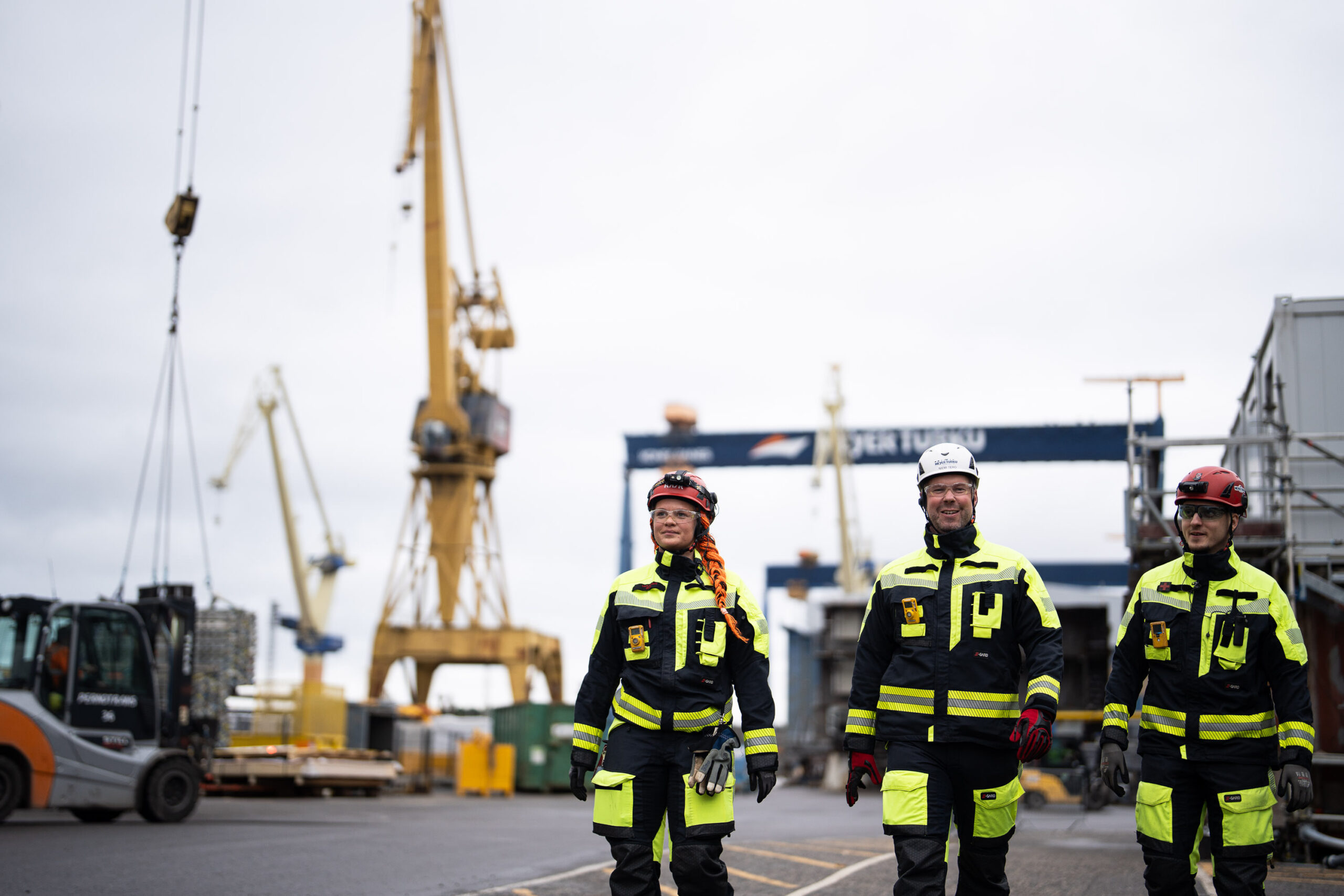
Meyer Turku’s use of Secapp also extends beyond the shipyard fire brigade. In the plate hall, Secapp’s Lone Worker Safety functionality is used to support the safety of employees working alone.
© Meyer Turku
Blasting notifications reach the right people responsible for safety
One concrete example of Secapp’s use concerns expansion and rock excavation work at the shipyard. Blasting takes place several times a week near a busy traffic route through the shipyard and close to production and working areas.
A dedicated group has been created in Secapp for personnel at the excavation site and employees responsible for safety in the immediate danger zone. A notification is sent to the group before blasting, after which the responsible personnel check their own areas and ensure that everyone has left.
Recipients acknowledge that they have seen the message, allowing the sender to track its delivery. As the excavation work progresses and the danger zone changes, group members can be added or removed according to the situation.
“This practice has worked extremely well. The messages have reached the right people, and the designated areas have been checked smoothly before blasting,” Helenius says.
Secapp is also used for other daily safety communications. For example, the arrival of an ambulance at the shipyard can be communicated directly to the people who need to know.
Close cooperation was crucial during implementation
Helenius describes Secapp’s implementation as technically smooth. The decisive factors were cooperation with Meyer Turku’s IT department, the system’s ease of use and the prompt support available from Secapp.
“If we encountered a problem or had a question, help from Secapp was quickly available by phone or email. The support has been extremely good after implementation as well,” Helenius says.
The biggest implementation challenge concerned timing rather than technology. The new system was introduced during a busy shipbuilding project, when communications about it were partly overshadowed by other work. When personnel from several organisations work in the same environment, rolling out the application to all the necessary users requires ongoing work.
The Secapp mobile application currently has around 500 users at Meyer Turku. They represent different occupational groups within Meyer Turku’s own workforce and the partner companies operating at the shipyard.
Further use cases have already been identified
According to Helenius, Meyer Turku sees opportunities to use Secapp beyond its current functions. One potential area for expansion is communicating maintenance shutdowns that affect operations.
The shipyard operates around the clock, so planned interruptions can affect several activities simultaneously. At present, shutdowns are communicated through channels including the intranet, but Secapp could complement these communications by delivering information directly to the groups affected.
Helenius believes that Secapp will also be used more extensively in large-scale exercises in the future. A planned ship evacuation exercise could provide an opportunity to monitor incoming acknowledgements and develop operating procedures based on practical observations.
“We want to expand the cooperation between Meyer Turku and Secapp so that, in the future, the service reaches as many people as possible who regularly work at the shipyard. This will allow safety information to be delivered quickly, in a controlled manner and to the right recipients,” Mylläri says.
According to Helenius, Secapp’s key value comes from reaching people, enabling smooth communications and retaining information:
“Secapp makes it easy to reach a large number of people through a single platform. It enables smooth communication, and conversations are saved for later learning and operational development.”
Secapp’s benefits at a glance
- Secapp brings Meyer Turku’s crisis and safety communications and the fire brigade’s daily activities onto a single platform.
- Messages can be targeted only to the people and groups affected by the situation. This improves control over communications and information security across the extensive shipyard environment.
- Message acknowledgements help track information delivery and verify progress on agreed safety measures.
- Secapp supports daily safety communications at the shipyard, for example during rock excavation work and emergency vehicle movements.
- The shipyard fire brigade has brought daily shift reporting, activity reports and call-out reports into Secapp. Reports completed on mobile devices bring information together and support information sharing between shifts.
- Ready-made message templates speed up the sending of overtime requests when the fire brigade needs additional personnel quickly.
- Messages, reports and conversations are saved for later review, learning and operational development.
- In the plate hall, Secapp is also used to support the safety of employees working alone.
© Meyer Turku
When thousands of people and hundreds of companies work at the same shipyard every day, simply sending a message is not enough for safety communications. It must quickly reach precisely the right people – and only them. Meyer Turku, one of the world’s leading shipbuilders, centralised its crisis and safety communications and the shipyard fire brigade’s reporting in Secapp.
Meyer Turku is one of the world’s leading builders of large, technically advanced cruise ships and specialised vessels. In addition to Meyer Turku’s own personnel, an extensive network of partners and their subcontractors contributes to the major shipbuilding projects at the Turku shipyard.
In such a large and constantly changing operating environment, safety information must flow quickly and in a controlled manner. What matters is not just how many people a message can be sent to, but also whether recipients can be selected according to the situation and message delivery can be verified.
Meyer Turku officially began using Secapp in early 2025. The aim was to improve control over crisis communications and bring the shipyard fire brigade’s reporting and other daily activities onto a single platform.
“Meyer Turku has an extensive operating environment, and the shipyard works with cutting-edge technology. The solutions used must therefore perform in a demanding environment. Together, we have identified clear use cases for Secapp and had useful discussions about how its use can be developed further,” says Janne Mylläri, Account Director at Secapp.
From an SMS distribution list to more targeted communications
Meyer Turku’s previous SMS-based solution did not allow recipients to be targeted with sufficient precision and flexibility as situations changed.
In Secapp, recipients can be divided into groups according to their purpose. A message is sent only to the people who should receive that information, and the situation can be discussed within a restricted group.
“Secapp has helped us take a major step forward in alerting and crisis communications. We have been able to target communications more effectively to the departments and people who need the information,” says Mikko Helenius, Deputy Fire Chief at Meyer Turku.
Fire brigade reporting moved to a single platform
At Meyer Turku, Secapp is more than a tool for alerting and crisis communications. The shipyard fire brigade uses it daily for shift reporting and for preparing activity reports and call-out reports.
The fire brigade operates around the clock in two shifts. At the start of a shift, an employee opens a shift report in Secapp, where events are recorded as the shift progresses. The report is reviewed during the shift handover, and the next shift can refer to it to check earlier events if needed.
The fire brigade’s activity reports and call-out reports can also be completed using Secapp’s mobile application while still on site or immediately after an assignment. Previously, information was entered into different programs on a computer. Secapp has brought reporting onto the same platform and made recording information and passing it on to the next shift more structured.
“Shift reporting by Meyer Turku’s fire brigade is an excellent, concrete example of how Secapp can support daily work and information sharing alongside exceptional situations. When shift events are recorded on the same platform, the information is retained and passed smoothly to the next shift,” Mylläri says.
Secapp is also used to send requests for overtime work to the shipyard fire brigade. Ready-made message templates have been created for different overtime situations, allowing an appropriate request to be sent quickly to all the personnel needed. Overtime requests may be needed, for example, if a ship evacuation takes longer than expected and additional personnel from the shipyard’s own fire brigade are required.
Meyer Turku’s use of Secapp also extends beyond the shipyard fire brigade. In the plate hall, Secapp’s Lone Worker Safety functionality is used to support the safety of employees working alone.
© Meyer Turku
Blasting notifications reach the right people responsible for safety
One concrete example of Secapp’s use concerns expansion and rock excavation work at the shipyard. Blasting takes place several times a week near a busy traffic route through the shipyard and close to production and working areas.
A dedicated group has been created in Secapp for personnel at the excavation site and employees responsible for safety in the immediate danger zone. A notification is sent to the group before blasting, after which the responsible personnel check their own areas and ensure that everyone has left.
Recipients acknowledge that they have seen the message, allowing the sender to track its delivery. As the excavation work progresses and the danger zone changes, group members can be added or removed according to the situation.
“This practice has worked extremely well. The messages have reached the right people, and the designated areas have been checked smoothly before blasting,” Helenius says.
Secapp is also used for other daily safety communications. For example, the arrival of an ambulance at the shipyard can be communicated directly to the people who need to know.
Close cooperation was crucial during implementation
Helenius describes Secapp’s implementation as technically smooth. The decisive factors were cooperation with Meyer Turku’s IT department, the system’s ease of use and the prompt support available from Secapp.
“If we encountered a problem or had a question, help from Secapp was quickly available by phone or email. The support has been extremely good after implementation as well,” Helenius says.
The biggest implementation challenge concerned timing rather than technology. The new system was introduced during a busy shipbuilding project, when communications about it were partly overshadowed by other work. When personnel from several organisations work in the same environment, rolling out the application to all the necessary users requires ongoing work.
The Secapp mobile application currently has around 500 users at Meyer Turku. They represent different occupational groups within Meyer Turku’s own workforce and the partner companies operating at the shipyard.
Further use cases have already been identified
According to Helenius, Meyer Turku sees opportunities to use Secapp beyond its current functions. One potential area for expansion is communicating maintenance shutdowns that affect operations.
The shipyard operates around the clock, so planned interruptions can affect several activities simultaneously. At present, shutdowns are communicated through channels including the intranet, but Secapp could complement these communications by delivering information directly to the groups affected.
Helenius believes that Secapp will also be used more extensively in large-scale exercises in the future. A planned ship evacuation exercise could provide an opportunity to monitor incoming acknowledgements and develop operating procedures based on practical observations.
“We want to expand the cooperation between Meyer Turku and Secapp so that, in the future, the service reaches as many people as possible who regularly work at the shipyard. This will allow safety information to be delivered quickly, in a controlled manner and to the right recipients,” Mylläri says.
According to Helenius, Secapp’s key value comes from reaching people, enabling smooth communications and retaining information:
“Secapp makes it easy to reach a large number of people through a single platform. It enables smooth communication, and conversations are saved for later learning and operational development.”
Secapp’s benefits at a glance
- Secapp brings Meyer Turku’s crisis and safety communications and the fire brigade’s daily activities onto a single platform.
- Messages can be targeted only to the people and groups affected by the situation. This improves control over communications and information security across the extensive shipyard environment.
- Message acknowledgements help track information delivery and verify progress on agreed safety measures.
- Secapp supports daily safety communications at the shipyard, for example during rock excavation work and emergency vehicle movements.
- The shipyard fire brigade has brought daily shift reporting, activity reports and call-out reports into Secapp. Reports completed on mobile devices bring information together and support information sharing between shifts.
- Ready-made message templates speed up the sending of overtime requests when the fire brigade needs additional personnel quickly.
- Messages, reports and conversations are saved for later review, learning and operational development.
- In the plate hall, Secapp is also used to support the safety of employees working alone.