
Photo: Matias Wesin/Head of EMS at the Lapland Wellbeing Services County
The Lapland Wellbeing Services County (Lapha) is responsible for emergency medical services in an area that covers nearly one quarter of Finland. Located near the Arctic Circle, Lapland comprises over 92,000 square kilometres of Arctic territory where population density is low, winters are long and harsh, and distances can stretch hundreds of kilometres. Around 175,000 people live in the area, but especially during the winter season in Rovaniemi, Levi and Saariselkä the population increases significantly due to tourism, which also affects the volume of EMS missions. In addition, the Sea-Lapland region hosts a large amount of industry and high-risk sites. These conditions require advance preparedness and highlight the importance of a functional communication and alerting system.
Secapp was first introduced in the Lapland Hospital District in 2017 to support EMS staffing alerts and major incident notifications, replacing the previous SMS-based system. Secapp was also used in the Länsi-Pohja Hospital District, and when the Lapland Wellbeing Services County was established, the solutions were merged into a single, unified entity. Today, Secapp plays a central role in Lapha’s communication during disruptions and exceptional situations, as well as in the daily flow of information within EMS, for example in staffing alerts.
The staffing alert process became clearer when Secapp eliminated burdensome call rounds
In Lapland, a single EMS mission can require travel of up to 500 kilometres. Long distances and extreme weather conditions can extend an already lengthy assignment considerably. Resources are scarce to begin with, especially when considering the long mission times of EMS units. Effective communication and staffing alerts are therefore crucial, especially when additional resources need to be organised quickly or large groups of personnel must be reached at once.
Before Secapp, staffing alerts were carried out using an SMS-based system, and alert templates related to preparedness were maintained separately by the Emergency Response Centre Agency. Using two separate systems and keeping alert lists up to date was laborious and often required several people to handle updates. In addition, employees had to call the field supervisor to confirm whether they could join a mission, creating a significant call burden that consumed time—and directly reduced the time available for actual leadership, which is especially critical in major incident situations.
“During the era of the SMS system, call rounds placed a heavy burden on field supervisors during multi-patient and major incident alerts, and it took time away from leadership tasks. Secapp eliminated this issue, because without the call round there was no advance visibility into how many people were actually coming. Secapp shows immediately how many people have responded to the alert and intend to arrive on site,” says Matias Wesin, Head of EMS at the Lapland Wellbeing Services County, who was involved in the deployment of Secapp in 2017.
The impact of Secapp is reflected in the sheer volume of messages sent in Lapha’s EMS services for staffing purposes alone.
“In 2024, 840 EMS staffing alert messages were sent, reaching 200,000 recipients. In 2025, by November, the corresponding figures were already 870 and 215,000, which illustrates the scale of communication carried out through Secapp,” Wesin explains.
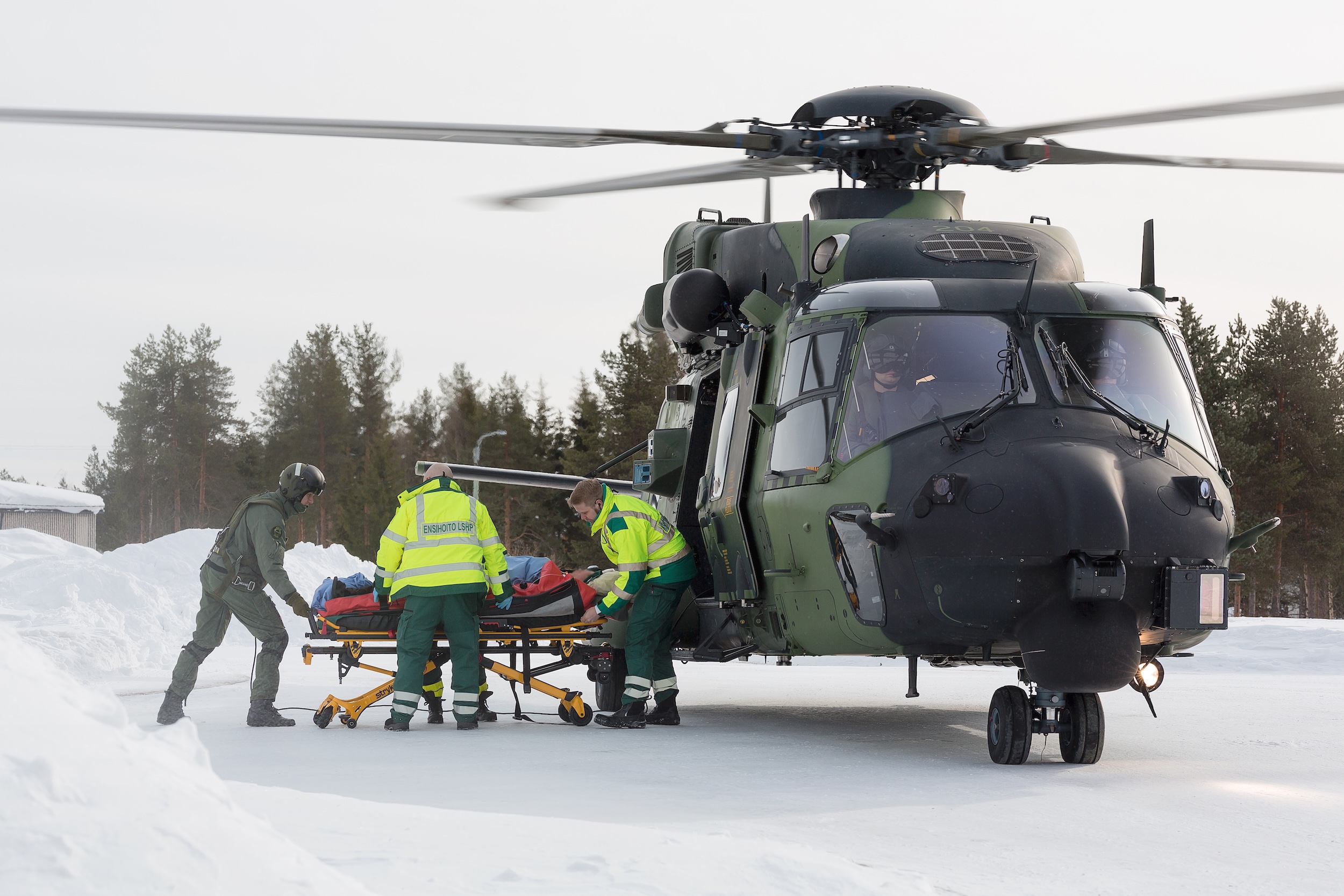
Photo: Matias Wesin/Head of EMS at the Lapland Wellbeing Services County
A unique model: employees can choose from which areas they receive alerts
When the hospital districts merged under the wellbeing services county, Wesin says there was a need to reconsider the alerting models. Due to the long distances, it does not make sense to send mission alerts from across the entire county to every employee. To address this challenge, a unique solution was built in Secapp specifically for Lapland EMS: employees can independently select the municipalities from which they wish to receive mission and overtime alerts.
This reduces alert fatigue, ensures alerts are genuinely targeted, and lightens supervisors’ workload because individual settings no longer need to be adjusted through administrators. The model is particularly beneficial for employees with multiple roles, such as paramedics who also serve in volunteer fire brigades.
“When the phone alerts, the employee knows the alert is meant for them and that they can realistically respond based on distance. This has been very well received by staff,” Wesin says.
Secapp brings clarity to daily communication and incident leadership
In addition to staffing alerts, Secapp is used in Lapha for daily information flow and the management of exceptional situations. Secapp has supported internal communications, for example by delivering a weekly staff bulletin directly to employees’ phones.
Over time, Secapp has become part of EMS daily routines. It is used for:
-
urgent information delivery
-
secure communication between units
-
maintaining situational awareness in exceptional situations
-
alerting defusing teams.
Elsewhere in the wellbeing services county, Secapp has been used for activating disruption leadership groups and supporting home care operations, for example by leveraging geolocation and video consultation functionality.
Exceptional and disruptive situations can emerge rapidly in Lapland and significantly affect unit operational capability. These include telecommunications outages, extensive weather fronts, sudden slipperiness, or situations where a unit is unable to proceed as planned. In such cases, it is essential that EMS leadership and supervisors receive real-time information on disruptions and exceptional events affecting service delivery, so that situational awareness remains consistent across the organisation.
“In maintaining situational awareness, we have taken a major leap forward thanks to Secapp. Information no longer fragments across phone calls, but remains collected in one place and available to everyone,” Wesin notes.
Careful planning ensures a successful deployment
The deployment of Secapp in Lapland progressed in phases: the system was first implemented in two separate hospital districts and later integrated into a shared wellbeing services county environment. According to Wesin, the most substantial effort was designing the alerting processes and communication models correctly from the start so that the system would serve the actual needs of EMS. Support from Secapp played a key role in the deployment, and alert templates and structures evolved gradually during the first year.
“In deployment, the most important thing is investing in needs and process planning. Secapp itself is easy to adopt, but the alerting process must be well thought out to support everyday operations. Particularly with large user volumes, the overall workload becomes significantly lighter when alerting models and usage practices are planned in advance before importing user data. When the planning is done properly from the beginning, deployment and building alert groups proceed much more smoothly,” Wesin emphasises.
Wesin offers three clear recommendations for other organisations preparing for deployment:
- Define the need precisely: “When you know what you want, Secapp’s experts will help find the best implementation.”
- Keep processes simple: “Things don’t need to be complicated. When alert templates and processes are clear, user actions become much easier.”
- Ensure training and a maintenance model: “When maintenance expertise is shared within the organisation, a single person doesn’t have to carry all responsibility.”
Overall, the deployment was smooth and the support from Secapp was excellent. Wesin describes the process like this:
“You never had to bang your head against the wall alone – support was always available, and everything was resolved quickly.”
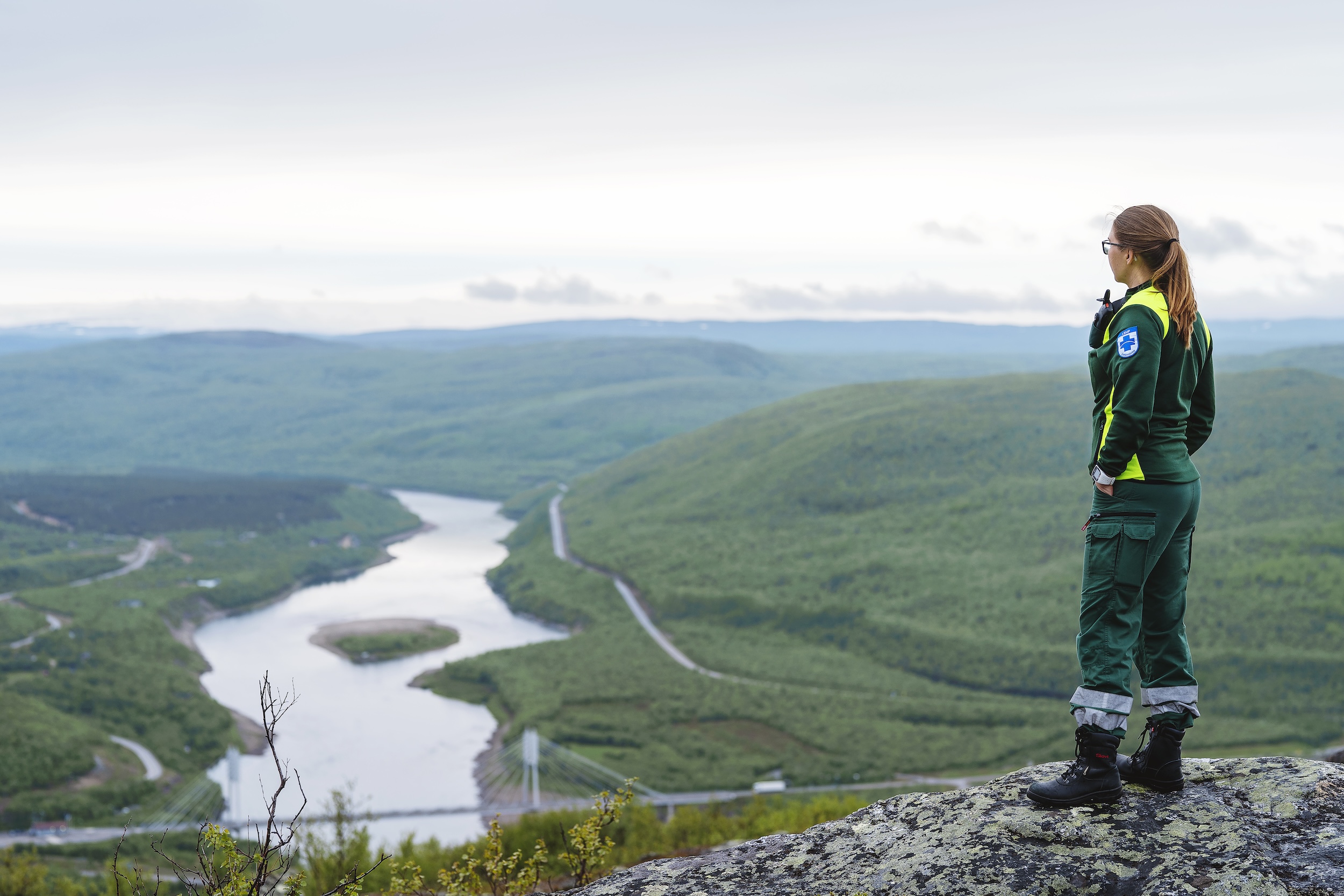
Photo: Matias Wesin/Head of EMS at the Lapland Wellbeing Services County
Nearly a decade of partnership shaped around Lapland’s needs – and the development continues
The Secapp partnership has continued in Lapland since 2017, and over the years the system has evolved into an essential part of EMS operations. According to Wesin, the key factor has been developing the solution genuinely based on Lapha’s needs.
“When you know what you need, Secapp has the expertise to deliver it. Cooperation has been straightforward, and support has always been available when needed,” Wesin summarises.
Currently, Lapha is exploring opportunities to expand the use of Secapp, for example in video consultation and sharing situational awareness across sectors. Long distances and sparse population make video-based assessment of care needs particularly appealing, as it can save significant time, resources, and unnecessary travel.
Lapha works closely with authorities in Sweden and Norway. For example, the Norwegian rescue helicopter may participate in rescue operations in the Lapland wilderness. According to Wesin, the possibility of using Secapp for information sharing and geolocation between countries has been discussed. Since operating environments and challenges are similar, the potential for expanding Secapp’s use on a Nordic level appears promising.
Summary of Secapp’s key benefits:
-
Secapp staffing alerts reach over 215,000 recipients annually in Lapland EMS.
-
In 2024, 840 EMS staffing alerts were sent through Secapp, and by November 2025 the figure was already 870.
-
EMS personnel can choose themselves from which areas they receive alerts – an important feature that reduces alert fatigue and improves relevance.
-
Secapp consolidates essential EMS communication functions: urgent messages, secure communication channels, situational awareness, defusing team alerts and activation of disruption leadership groups.
-
Maintenance of alert lists was transferred from the Emergency Response Centre Agency to the organisation itself, making updates easier.
-
Secapp’s high-priority alerts ensure reachability even when a device is on silent mode, which is particularly important in Lapland where delays may occur due to long distances and challenging conditions.
Photo: Matias Wesin/Head of EMS at the Lapland Wellbeing Services County
The Lapland Wellbeing Services County (Lapha) is responsible for emergency medical services in an area that covers nearly one quarter of Finland. Located near the Arctic Circle, Lapland comprises over 92,000 square kilometres of Arctic territory where population density is low, winters are long and harsh, and distances can stretch hundreds of kilometres. Around 175,000 people live in the area, but especially during the winter season in Rovaniemi, Levi and Saariselkä the population increases significantly due to tourism, which also affects the volume of EMS missions. In addition, the Sea-Lapland region hosts a large amount of industry and high-risk sites. These conditions require advance preparedness and highlight the importance of a functional communication and alerting system.
Secapp was first introduced in the Lapland Hospital District in 2017 to support EMS staffing alerts and major incident notifications, replacing the previous SMS-based system. Secapp was also used in the Länsi-Pohja Hospital District, and when the Lapland Wellbeing Services County was established, the solutions were merged into a single, unified entity. Today, Secapp plays a central role in Lapha’s communication during disruptions and exceptional situations, as well as in the daily flow of information within EMS, for example in staffing alerts.
The staffing alert process became clearer when Secapp eliminated burdensome call rounds
In Lapland, a single EMS mission can require travel of up to 500 kilometres. Long distances and extreme weather conditions can extend an already lengthy assignment considerably. Resources are scarce to begin with, especially when considering the long mission times of EMS units. Effective communication and staffing alerts are therefore crucial, especially when additional resources need to be organised quickly or large groups of personnel must be reached at once.
Before Secapp, staffing alerts were carried out using an SMS-based system, and alert templates related to preparedness were maintained separately by the Emergency Response Centre Agency. Using two separate systems and keeping alert lists up to date was laborious and often required several people to handle updates. In addition, employees had to call the field supervisor to confirm whether they could join a mission, creating a significant call burden that consumed time—and directly reduced the time available for actual leadership, which is especially critical in major incident situations.
“During the era of the SMS system, call rounds placed a heavy burden on field supervisors during multi-patient and major incident alerts, and it took time away from leadership tasks. Secapp eliminated this issue, because without the call round there was no advance visibility into how many people were actually coming. Secapp shows immediately how many people have responded to the alert and intend to arrive on site,” says Matias Wesin, Head of EMS at the Lapland Wellbeing Services County, who was involved in the deployment of Secapp in 2017.
The impact of Secapp is reflected in the sheer volume of messages sent in Lapha’s EMS services for staffing purposes alone.
“In 2024, 840 EMS staffing alert messages were sent, reaching 200,000 recipients. In 2025, by November, the corresponding figures were already 870 and 215,000, which illustrates the scale of communication carried out through Secapp,” Wesin explains.
Photo: Matias Wesin/Head of EMS at the Lapland Wellbeing Services County
A unique model: employees can choose from which areas they receive alerts
When the hospital districts merged under the wellbeing services county, Wesin says there was a need to reconsider the alerting models. Due to the long distances, it does not make sense to send mission alerts from across the entire county to every employee. To address this challenge, a unique solution was built in Secapp specifically for Lapland EMS: employees can independently select the municipalities from which they wish to receive mission and overtime alerts.
This reduces alert fatigue, ensures alerts are genuinely targeted, and lightens supervisors’ workload because individual settings no longer need to be adjusted through administrators. The model is particularly beneficial for employees with multiple roles, such as paramedics who also serve in volunteer fire brigades.
“When the phone alerts, the employee knows the alert is meant for them and that they can realistically respond based on distance. This has been very well received by staff,” Wesin says.
Secapp brings clarity to daily communication and incident leadership
In addition to staffing alerts, Secapp is used in Lapha for daily information flow and the management of exceptional situations. Secapp has supported internal communications, for example by delivering a weekly staff bulletin directly to employees’ phones.
Over time, Secapp has become part of EMS daily routines. It is used for:
-
urgent information delivery
-
secure communication between units
-
maintaining situational awareness in exceptional situations
-
alerting defusing teams.
Elsewhere in the wellbeing services county, Secapp has been used for activating disruption leadership groups and supporting home care operations, for example by leveraging geolocation and video consultation functionality.
Exceptional and disruptive situations can emerge rapidly in Lapland and significantly affect unit operational capability. These include telecommunications outages, extensive weather fronts, sudden slipperiness, or situations where a unit is unable to proceed as planned. In such cases, it is essential that EMS leadership and supervisors receive real-time information on disruptions and exceptional events affecting service delivery, so that situational awareness remains consistent across the organisation.
“In maintaining situational awareness, we have taken a major leap forward thanks to Secapp. Information no longer fragments across phone calls, but remains collected in one place and available to everyone,” Wesin notes.
Careful planning ensures a successful deployment
The deployment of Secapp in Lapland progressed in phases: the system was first implemented in two separate hospital districts and later integrated into a shared wellbeing services county environment. According to Wesin, the most substantial effort was designing the alerting processes and communication models correctly from the start so that the system would serve the actual needs of EMS. Support from Secapp played a key role in the deployment, and alert templates and structures evolved gradually during the first year.
“In deployment, the most important thing is investing in needs and process planning. Secapp itself is easy to adopt, but the alerting process must be well thought out to support everyday operations. Particularly with large user volumes, the overall workload becomes significantly lighter when alerting models and usage practices are planned in advance before importing user data. When the planning is done properly from the beginning, deployment and building alert groups proceed much more smoothly,” Wesin emphasises.
Wesin offers three clear recommendations for other organisations preparing for deployment:
- Define the need precisely: “When you know what you want, Secapp’s experts will help find the best implementation.”
- Keep processes simple: “Things don’t need to be complicated. When alert templates and processes are clear, user actions become much easier.”
- Ensure training and a maintenance model: “When maintenance expertise is shared within the organisation, a single person doesn’t have to carry all responsibility.”
Overall, the deployment was smooth and the support from Secapp was excellent. Wesin describes the process like this:
“You never had to bang your head against the wall alone – support was always available, and everything was resolved quickly.”
Photo: Matias Wesin/Head of EMS at the Lapland Wellbeing Services County
Nearly a decade of partnership shaped around Lapland’s needs – and the development continues
The Secapp partnership has continued in Lapland since 2017, and over the years the system has evolved into an essential part of EMS operations. According to Wesin, the key factor has been developing the solution genuinely based on Lapha’s needs.
“When you know what you need, Secapp has the expertise to deliver it. Cooperation has been straightforward, and support has always been available when needed,” Wesin summarises.
Currently, Lapha is exploring opportunities to expand the use of Secapp, for example in video consultation and sharing situational awareness across sectors. Long distances and sparse population make video-based assessment of care needs particularly appealing, as it can save significant time, resources, and unnecessary travel.
Lapha works closely with authorities in Sweden and Norway. For example, the Norwegian rescue helicopter may participate in rescue operations in the Lapland wilderness. According to Wesin, the possibility of using Secapp for information sharing and geolocation between countries has been discussed. Since operating environments and challenges are similar, the potential for expanding Secapp’s use on a Nordic level appears promising.
Summary of Secapp’s key benefits:
-
Secapp staffing alerts reach over 215,000 recipients annually in Lapland EMS.
-
In 2024, 840 EMS staffing alerts were sent through Secapp, and by November 2025 the figure was already 870.
-
EMS personnel can choose themselves from which areas they receive alerts – an important feature that reduces alert fatigue and improves relevance.
-
Secapp consolidates essential EMS communication functions: urgent messages, secure communication channels, situational awareness, defusing team alerts and activation of disruption leadership groups.
-
Maintenance of alert lists was transferred from the Emergency Response Centre Agency to the organisation itself, making updates easier.
-
Secapp’s high-priority alerts ensure reachability even when a device is on silent mode, which is particularly important in Lapland where delays may occur due to long distances and challenging conditions.