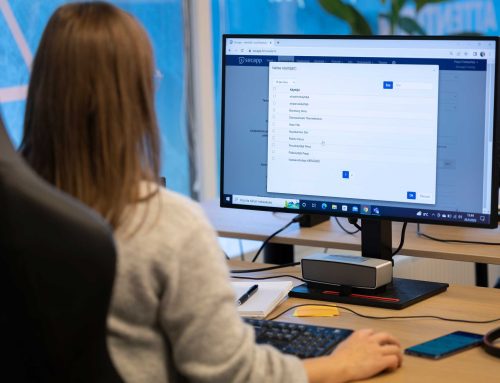
Four municipalities replaced fragmented incident communication with a unified system, improving response coordination across municipal boundaries and reducing communication overhead during disruptions.
Key Outcomes:
-
Unified communication across 4 municipalities
-
Faster reach to key personnel in disruptions
-
Reduced communication noise via targeted alerts
-
Shared situational awareness across organizations

Located in Southwest Finland, Kaarina, Paimio, Sauvo and Lieto identified a shared need: for disruptions and exceptional situations, they needed a functional, reliable and unified communications system that would support cooperation between municipalities. To support their joint preparedness efforts, the municipalities chose Secapp. This is a unique model, as a similar practice has not yet been implemented elsewhere.
For the municipalities, joint preparedness meant more than shared planning. It required practical operating models and tools that would also work during disruptions. In cooperation between municipalities, the need for a communications solution that is reliable, fast, and supports the creation of a shared situational picture across municipal boundaries became especially important.
The overall preparedness effort is coordinated by a shared preparedness manager for the four municipalities. His task is to develop common operating models and ensure that, in disruption situations, information reaches the right people at the right time, including across municipal boundaries.
From fragmented communication to a unified operating model
Disruptions in municipalities may include, for example, water or power outages, cyber incidents, or other situations that make day-to-day operations more difficult, where fast and targeted communication is critical. Before Secapp, communications during disruptions in the municipalities were spread across multiple channels. Teams, email, phone calls and various instant messaging services were all in use.
“Communication was fragmented. We identified a need to standardize the way we operate so that key people can be reached regardless of the time of day and so that we can operate on a single platform,” says Samu Ekroos, the shared preparedness manager for the four municipalities.
When preparedness is carried out jointly, communications must also support cross-municipal operations and a shared situational picture. Secapp’s alerting and information-sharing functions support rapid response in disruption situations through ready-made message templates, targeted alerting, and a shared situational picture.
Joint procurement as part of shared preparedness
The choice of Secapp was based on an identified need and previous user experience.
“I myself have been using Secapp since 2015. I recognized features that are suitable not only for alerting but also for communication, building situational awareness and file sharing. It is one part of working together,” Ekroos explains.
The joint procurement progressed smoothly in the municipalities, and the rollout was carried out in a controlled way through training. After the main user training, the system was easy to deploy, and implementation did not require heavy changes to existing operating models. This made it possible to bring Secapp quickly into use as part of everyday preparedness. In three municipalities, Secapp is already in active use, and in one municipality the rollout is still being tested.
In selecting Secapp, particular emphasis was placed on the system’s suitability for joint municipal preparedness, its operational reliability in disruption situations, and its ease of expansion across different sectors. The solution must also work in situations where other everyday systems are unavailable and support joint operations across multiple municipalities without heavy integrations or complicated administration.
Secapp operates as a separate system and is not dependent on any single communication channel or on the user’s personal credentials.
Secapp supports disruption communications and situational awareness
At present, Secapp is used in the municipalities especially for communications during disruptions. One key change compared with earlier practices has been the targeting of communications: not all information goes to everyone, but messages can be directed precisely to the actors whom the situation concerns. This reduces unnecessary noise and helps people focus on what matters during a disruption.
A unified system makes it possible to:
-
communicate on a single platform
-
reach key people quickly
-
build and monitor a situational picture
-
share information between municipalities.
“Standardization has been a key change. We now operate on a single platform, and that significantly lightens both communications and management in disruption situations,” says Ekroos.
Use began with core functions and key personnel, and the system has been expanded as needed. Its use is continuously reviewed in relation to preparedness needs and the roles of different sectors.
Anticipation and cooperation across municipal boundaries
Secapp is not only for reacting, it also supports anticipation and cooperation across municipal boundaries.
“We can now give other municipalities heads-up type information across municipal boundaries: this kind of disruption is underway, it does not require a response, but it is worth monitoring. This supports anticipation and preparedness,” Ekroos explains.
A shared system makes it possible for municipalities to monitor each other’s situations and, where necessary, prepare even before a disruption affects their own operations. At the same time, it has strengthened cooperation with the wellbeing services county.
“The wellbeing services county is a key partner in disruption situations. When we use the same system, there is no need for separate solutions for communication. This makes information sharing and joint preparedness easier,” Ekroos says.
The municipalities have been able to pass advance information to the wellbeing services county about disruptions that affect service delivery and residents’ daily lives. This has enabled the wellbeing services county to prepare its own measures in time.
Value is created by making communications, management and situational awareness lighter
For municipalities, any system purchase is an investment whose benefits are examined critically. According to Ekroos, the value of Secapp does not come from a single feature, but from the whole: when communications, management and situational awareness are made lighter, fewer staff hours are needed to manage disruptions and their impacts remain smaller.
“When communications, management and situational awareness activities become lighter, that serves absolutely everything. If processes become lighter and the impacts of disruptions can be managed better, savings are created as well,” he says.
In disruption situations, municipalities have many other things to manage as well. That is why the system must support operations, not burden them. At the same time, a crisis tool that is used only rarely carries the risk that it will feel unfamiliar when it is needed most. The advantage of Secapp is that it can also be used in the day-to-day work of preparedness, for communication, maintaining situational awareness and sharing information, which means that using it remains natural even in exceptional situations.
Secapp is particularly well suited to joint municipal preparedness
Ekroos also encourages other municipalities to consider a shared system to support preparedness.
“If municipalities cooperate in preparedness, a shared system makes communication, the forwarding of support requests, and the formation of a situational picture easier during the disruption management phase. For us, Secapp has proven to be a functional solution for exactly this,” Ekroos says.
The Southwest Finland model shows that shared preparedness and a shared system can form a whole that supports municipal operations not only in crises but also in day-to-day anticipation and information-led management.
Why is Secapp a good fit for joint municipal preparedness?
In the shared preparedness model of the four municipalities, the communications solution was required to provide operational reliability, dependability, and suitability for cooperation among multiple actors. Secapp meets these requirements on several levels:
-
Domestic origin and security of supply: Secapp is a Finnish solution in which communications and data remain in Finland, under Finnish legislation.
-
Operational reliability in disruptions and exceptional situations: Secapp is designed for both public-authority use and crisis situations. The system functions as a separate solution and is not dependent on everyday communication or collaboration systems.
-
Cooperation across municipal boundaries: Secapp enables communication and the sharing of situational awareness between multiple municipalities. The solution is not limited to internal organizational alerting, but supports broader cooperation and anticipation.
-
Controlled and easy deployment: Deployment is supported by training, and the system can be introduced in phases. This lowers the threshold for adopting a new system and supports embedding it into daily operations.

Four municipalities replaced fragmented incident communication with a unified system, improving response coordination across municipal boundaries and reducing communication overhead during disruptions.
Key Outcomes:
-
Unified communication across 4 municipalities
-
Faster reach to key personnel in disruptions
-
Reduced communication noise via targeted alerts
-
Shared situational awareness across organizations
Located in Southwest Finland, Kaarina, Paimio, Sauvo and Lieto identified a shared need: for disruptions and exceptional situations, they needed a functional, reliable and unified communications system that would support cooperation between municipalities. To support their joint preparedness efforts, the municipalities chose Secapp. This is a unique model, as a similar practice has not yet been implemented elsewhere.
For the municipalities, joint preparedness meant more than shared planning. It required practical operating models and tools that would also work during disruptions. In cooperation between municipalities, the need for a communications solution that is reliable, fast, and supports the creation of a shared situational picture across municipal boundaries became especially important.
The overall preparedness effort is coordinated by a shared preparedness manager for the four municipalities. His task is to develop common operating models and ensure that, in disruption situations, information reaches the right people at the right time, including across municipal boundaries.
From fragmented communication to a unified operating model
Disruptions in municipalities may include, for example, water or power outages, cyber incidents, or other situations that make day-to-day operations more difficult, where fast and targeted communication is critical. Before Secapp, communications during disruptions in the municipalities were spread across multiple channels. Teams, email, phone calls and various instant messaging services were all in use.
“Communication was fragmented. We identified a need to standardize the way we operate so that key people can be reached regardless of the time of day and so that we can operate on a single platform,” says Samu Ekroos, the shared preparedness manager for the four municipalities.
When preparedness is carried out jointly, communications must also support cross-municipal operations and a shared situational picture. Secapp’s alerting and information-sharing functions support rapid response in disruption situations through ready-made message templates, targeted alerting, and a shared situational picture.
Joint procurement as part of shared preparedness
The choice of Secapp was based on an identified need and previous user experience.
“I myself have been using Secapp since 2015. I recognized features that are suitable not only for alerting but also for communication, building situational awareness and file sharing. It is one part of working together,” Ekroos explains.
The joint procurement progressed smoothly in the municipalities, and the rollout was carried out in a controlled way through training. After the main user training, the system was easy to deploy, and implementation did not require heavy changes to existing operating models. This made it possible to bring Secapp quickly into use as part of everyday preparedness. In three municipalities, Secapp is already in active use, and in one municipality the rollout is still being tested.
In selecting Secapp, particular emphasis was placed on the system’s suitability for joint municipal preparedness, its operational reliability in disruption situations, and its ease of expansion across different sectors. The solution must also work in situations where other everyday systems are unavailable and support joint operations across multiple municipalities without heavy integrations or complicated administration.
Secapp operates as a separate system and is not dependent on any single communication channel or on the user’s personal credentials.
Secapp supports disruption communications and situational awareness
At present, Secapp is used in the municipalities especially for communications during disruptions. One key change compared with earlier practices has been the targeting of communications: not all information goes to everyone, but messages can be directed precisely to the actors whom the situation concerns. This reduces unnecessary noise and helps people focus on what matters during a disruption.
A unified system makes it possible to:
-
communicate on a single platform
-
reach key people quickly
-
build and monitor a situational picture
-
share information between municipalities.
“Standardization has been a key change. We now operate on a single platform, and that significantly lightens both communications and management in disruption situations,” says Ekroos.
Use began with core functions and key personnel, and the system has been expanded as needed. Its use is continuously reviewed in relation to preparedness needs and the roles of different sectors.
Anticipation and cooperation across municipal boundaries
Secapp is not only for reacting, it also supports anticipation and cooperation across municipal boundaries.
“We can now give other municipalities heads-up type information across municipal boundaries: this kind of disruption is underway, it does not require a response, but it is worth monitoring. This supports anticipation and preparedness,” Ekroos explains.
A shared system makes it possible for municipalities to monitor each other’s situations and, where necessary, prepare even before a disruption affects their own operations. At the same time, it has strengthened cooperation with the wellbeing services county.
“The wellbeing services county is a key partner in disruption situations. When we use the same system, there is no need for separate solutions for communication. This makes information sharing and joint preparedness easier,” Ekroos says.
The municipalities have been able to pass advance information to the wellbeing services county about disruptions that affect service delivery and residents’ daily lives. This has enabled the wellbeing services county to prepare its own measures in time.
Value is created by making communications, management and situational awareness lighter
For municipalities, any system purchase is an investment whose benefits are examined critically. According to Ekroos, the value of Secapp does not come from a single feature, but from the whole: when communications, management and situational awareness are made lighter, fewer staff hours are needed to manage disruptions and their impacts remain smaller.
“When communications, management and situational awareness activities become lighter, that serves absolutely everything. If processes become lighter and the impacts of disruptions can be managed better, savings are created as well,” he says.
In disruption situations, municipalities have many other things to manage as well. That is why the system must support operations, not burden them. At the same time, a crisis tool that is used only rarely carries the risk that it will feel unfamiliar when it is needed most. The advantage of Secapp is that it can also be used in the day-to-day work of preparedness, for communication, maintaining situational awareness and sharing information, which means that using it remains natural even in exceptional situations.
Secapp is particularly well suited to joint municipal preparedness
Ekroos also encourages other municipalities to consider a shared system to support preparedness.
“If municipalities cooperate in preparedness, a shared system makes communication, the forwarding of support requests, and the formation of a situational picture easier during the disruption management phase. For us, Secapp has proven to be a functional solution for exactly this,” Ekroos says.
The Southwest Finland model shows that shared preparedness and a shared system can form a whole that supports municipal operations not only in crises but also in day-to-day anticipation and information-led management.
Why is Secapp a good fit for joint municipal preparedness?
In the shared preparedness model of the four municipalities, the communications solution was required to provide operational reliability, dependability, and suitability for cooperation among multiple actors. Secapp meets these requirements on several levels:
-
Domestic origin and security of supply: Secapp is a Finnish solution in which communications and data remain in Finland, under Finnish legislation.
-
Operational reliability in disruptions and exceptional situations: Secapp is designed for both public-authority use and crisis situations. The system functions as a separate solution and is not dependent on everyday communication or collaboration systems.
-
Cooperation across municipal boundaries: Secapp enables communication and the sharing of situational awareness between multiple municipalities. The solution is not limited to internal organizational alerting, but supports broader cooperation and anticipation.
-
Controlled and easy deployment: Deployment is supported by training, and the system can be introduced in phases. This lowers the threshold for adopting a new system and supports embedding it into daily operations.